
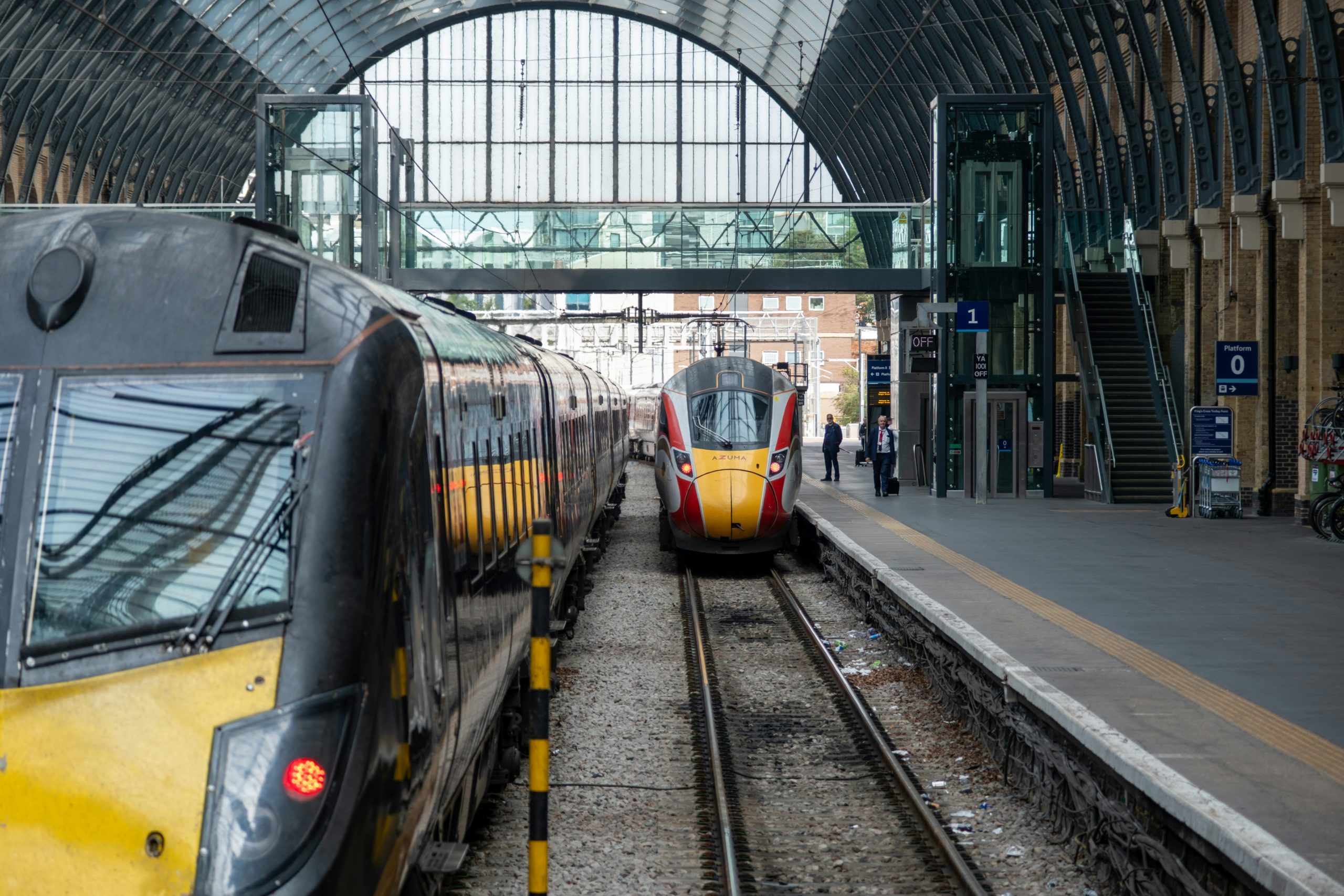
Public Transportation: Green, Affordable, Reliable — Fantasy or Reality?
Almost everyone has used public transport at some point, whether by train, tram, bus, bicycle, or
even boat. Yet many people are increasingly confronted by the high cost of travelling. London, for
example, is often praised for having one of the world’s most extensive transport systems, but
travelling to and from work can easily cost more than £6 a day on the Underground alone
(Transport for London, n.d.). Driving may seem like an alternative, but the high cost of owning a
car, fuel prices, maintenance, and severe congestion make it far from ideal.
The London Underground may be one of the fastest ways to travel across the capital, but at what
cost? High fares, overcrowding, occasional strikes, delays, and ageing infrastructure leave many
commuters frustrated. This raises an important question: can public transportation become greener,
more reliable, and more affordable at the same time? Or must one of these goals be sacrificed in
order to achieve the others?
Cities such as Tokyo, Berlin, and Luxembourg have managed to build transport systems that are
efficient, accessible, and environmentally conscious. How come London, the city that has been
described as one of the greatest cities in the world struggled to achieve the same balance?
This article explores how London and the wider United Kingdom could create a more ideal public
transport system, what the Government and local authorities should prioritise and which lessons
from other countries Britain could adopt.
To grasp a concept of an ideal public transport system, I would conceptualise it as environmentally
sustainable, affordable, reliable and accessible to everyone.
According to the British Department for Transport, domestic transport is responsible for more than
109 million tonnes of carbon dioxide equivalent emissions annually. A passenger travelling from
London to Glasgow by plane produces approximately 175 kilograms of carbon dioxide emissions,
roughly equivalent to the weight of 29 bags of cement. Travelling by train on the same route would
produce around 28 kilograms of CO2, significantly lower than air travel (Department for Transport,
2023).
However, despite trains being the greener option, ticket prices often discourage people from using
them. A same-day flight from London to Glasgow can cost around £71(British Airways, n.d.),
whereas a train ticket may cost approximately £161(Avanti West Coast, n.d.), when comparing at
approximately the same departing time. Those £90 differences inevitably encourage passengers to
choose air travel instead.
Statistics from the Civil Aviation Authority show that more than 100,000 passengers travelled
between London and Glasgow during the months of July to September in 2021 alone. Annually, this
could make up to around 400,000 passengers, generating tens of millions of kilograms of carbon
dioxide emissions. (Department for Transport, 2023).
The Government often encourages citizens to make environmentally friendly choices, but simply
telling people that trains are greener is definitely not enough. Affordability remains one of the
strongest factors influencing transport decisions. If sustainable travel is significantly more
expensive, many people will continue to choose cheaper alternatives regardless of environmental
concerns.
Case Studies: UK and the World
The main problem is that train fares in the UK remain exceptionally expensive compared with those
in many European countries.
The journey from London to Glasgow covers approximately 350 mile and can cost around £89.
Meanwhile, a similar journey from Munich to Berlin in Germany,
approximately 360 miles, costs only around £49 (wage.is, 2026).
Taken the minimum wages between the UK and Germany into account, British rail fares remain
disproportionately high (TUC, 2014).
Germany provides an interesting lesson. Its government introduced heavily subsidised public
transport tickets funded through taxation. It also implemented fare systems and nationwide tickets,
making public transport easier and more attractive to use. Once passengers had purchased a
universal ticket, many felt encouraged to use trains, trams and buses more frequently instead of
relying on cars (Jones, 2022).
The result was a substantial increase in public transport usage, including
those who used public transport for the first time. It is evident that when public transport is
perceived as user-friendly and accessible, more people are willing to use it.
However, cheap fares alone are not enough. Germany’s experience also revealed the weaknesses of
ageing infrastructure, insufficient capacity and delays when passenger numbers increased
dramatically (Jones, 2022). This demonstrates that affordability must be accompanied by reliability.
Japan offers another valuable example. Surprisingly, in contrast of the name ‘public transportation’,
Japan’s public transport system is privately owned (Siegal, 2025). Yet Japanese rail operators have
managed to maintain relatively affordable fares while providing one of the world’s most reliable
transport systems (Bornholt & Springbett, 2026). The reason lies not only in government policy but
also in infrastructure and urban planning. Japanese railway companies often operate far more than
trains alone. Many own shopping centres, hotels, department stores, office buildings and housing
developments surrounding their stations.
As a result, transport companies earn sizeable revenue from commercial activity rather than relying
solely on ticket sales (Bornholt & Springbett, 2026). This business model allows rail operators to
keep fares relatively low whilst encouraging people to travel to areas connected to their networks.
Revenue circulates through the wider ecosystem surrounding stations, which creates sustainable
long-term profits. Japan has also embraced transit-oriented development. Dense neighbourhoods are
built around railway stations, ensuring that shops, schools, workplaces and public services are easily
accessible by public transport (UR, 2025). This creates a positive cycle: more passengers generate
more revenue, which improves services and encourages further development around transport hubs.
Luxembourg presents another fascinating example. The country became the first in the world to
introduce free nationwide public transport (The Guardian, 2020).
However, the reasoning behind this policy is often misunderstood. Before fares were abolished,
ticket revenue already accounted for only a small proportion of the system’s funding, with
government subsidies covering more than 90 per cent of costs. Removing fares therefore did not
completely transform the financial structure, it simply eliminated the remaining share paid directly
by passengers. Luxembourg treats public transport as a public good, much like pavements or public
roads. At the same time, the country continues to invest heavily in service quality and infrastructure
improvements. Policymakers recognised that convenience and reliability matter more than fares
alone (DW, 2020)
Nevertheless, Luxembourg still faces challenges with its public transportation. Lots of people who
work in Luxembourg are foreign nationals and live outside the country. Many commuters still
choose to drive into the country from neighbouring states because cars remain more convenient in
certain circumstances. This demonstrates that free public transport alone cannot solve every
problem (WinWIn4WorkLife, n.d.).
Public transport is already a greener alternative to private cars and air travel, but can transport
systems themselves become greener? In the UK, many urban transport systems already use
electricity or renewable energy sources. However, numerous railway lines still rely on dieselpowered
trains (House of Commons Transportation Committee, 2021). The Netherlands offers a
compelling example of how railways can transition towards renewable
energy.
Dutch rail operators ensured that trains ran entirely on wind-generated electricity by signing
long-term agreements with renewable energy suppliers. These contracts guaranteed demand for
green energy, reduced investment risks and encouraged the expansion of renewable infrastructure.
Centralised coordination also helped the Netherlands achieve these goals more efficiently. Longterm
planning, combined with political commitment, allowed the country to create a railway system
powered entirely by renewable electricity while maintaining economic stability (Lo, 2015).
What the UK Needs to Do
The UK could learn important lessons from these international examples. Britain does not
necessarily need to copy one system entirely, but it can adopt successful elements from each model.
Firstly, the UK must make public transport genuinely affordable. Rail fares should be reduced
through targeted subsidies, simplified ticketing systems and the expansion of flexible nationwide
travel passes. Sustainable transport should not cost more than environmentally damaging
alternatives.
Secondly, the Government must invest heavily in infrastructure modernisation. Affordable tickets
are meaningless if trains are overcrowded, delayed or unreliable. Upgrading railway lines,
increasing capacity and improving maintenance are essential.
Thirdly, Britain should encourage transit-oriented development similar to Japan’s model. Building
homes, businesses, and public services around transport hubs would reduce car dependency while
increasing public transport usage.
Moreover, the UK should accelerate railway electrification and renewable energy investment. The
long-term transition away from diesel-powered trains is essential if Britain hopes to meet its climate
commitments.
Nonetheless, accessibility needs to remain a central priority. Public transportation should be
designed to serve everyone. In the UK, numerous public transport systems, including rails such as
the London tube network and the National Rail still fail to provide accessibility to those who are in
need. A numbers of tube lines and train stations are not equiped with step-free access. The improved
connections would ensure that public transport becomes a realistic alternative for everyone.
Finally, policymakers must rethink public transport not merely as a business, but as a public service
and national investment. Reliable and accessible transport strengthens the economy, improves
environmental sustainability whilst enhances quality of life.
Creating a public transport system that is green, affordable and reliable is not a fantasy. The
challenge for the UK is whether it is willing to make the long-term investments and political
decisions necessary to achieve it.
Bibliography:
- Avanti West Coast. (n.d.). Train ticket search results. Avanti West Coast. Retrieved July 11,
2026, from https://www.avantiwestcoast.co.uk/train-tickets/search-results - British Airways. (n.d.). Flight booking. British Airways. Retrieved July 11, 2026, from https://
www.britishairways.com/nx/b/airselect/en/gbr/book/search/?
from=LHR&to=GLA&departureDate=2026-07-21&adults=1&youngAdults=0&children=0&in
fants=0&travelClass=economy&trip=oneWay&bound=outbound&appName=book - Connolly, K. (2022, July 18). Germany faces calls to extend €9-a-month public transport
ticket. The Guardian. https://www.theguardian.com/world/2022/jul/18/germany-faces-callsextend-
9-month-public-transport-ticket - Deutsche Welle. (2022). Germany’s €9 transport ticket drives up train trips. https://
www.dw.com/en/germanys-9-euro-transport-ticket-drives-up-train-trips/a-62776756 - Global Railway Review. (2024). Lessons learnt from Luxembourg’s fare-free transport system.
https://www.globalrailwayreview.com/lessons-learnt-from-luxembourgs-fare-free-transportsystem/
329222.article - House of Commons Transport Committee. (2021). Public transport fares and ticketing (HC
876). UK Parliament. https://publications.parliament.uk/pa/cm5801/cmselect/cmtrans/
876/87603.htm - Lo, C. (n.d.). Running on wind: The Dutch rail network’s renewable revolution. Railway
Technology. https://www.railway-technology.com/features/featuremichel-kerkhof-of-enecodiscusses-
the-dutch-rail-networks-renewable-revolution-4647194/\ - Rose, S. (2023, September 20). All aboard: Can Luxembourg’s free public transport help save
the world? The Guardian. https://www.theguardian.com/world/2023/sep/20/all-aboard-canluxembourgs-
free-public-transport-help-save-the-world - Trades Union Congress. (n.d.). UK commuters spend over three times more of their salary on
rail fares than most European passengers. https://www.tuc.org.uk/news/uk-commuters-spendover-
three-times-more-of-their-salary-on-rail-fares-than-most-european-passengers - Transport for London. (n.d.). Single fare finder. Retrieved July 11, 2026, from https://tfl.gov.uk/
fares/find-fares/single-fare-finder - UK Government, Department for Transport. (2023). Transport and environment statistics 2023.
https://www.gov.uk/government/statistics/transport-and-environment-statistics-2023/transportand-
environment-statistics-2023 - Urban Renaissance Agency. (n.d.). Urban renaissance in Tokyo. https://www.ur-net.go.jp/
overseas/urtod.html - WageIndicator Foundation. (n.d.). Minimum wage comparison: Germany vs. United Kingdom.
https://wage.is/germany/vs/united-kingdom/ - WinWin4WorkLife. (n.d.). Luxembourg and the Greater Region. https://winwin4worklife.eu/
casestudy/luxembourg-and-the-greater-region/



Leave a Reply